Keystone Outdoor Solutions
There’s a Saturday in October when the kids stay outside till ten, the patio is warm, and dinner stretches into a second pot of coffee around the fire. That’s the outdoor fireplace we build for Lancaster County yards. Keystone Outdoor Solutions has been laying stone, brick, and pavers across Lancaster County since 2002, and outdoor fireplace installation and outdoor fire pit work are some of the most rewarding masonry jobs we do. Free onsite consultation, 3D rendering before any stone is set, written itemized quote.
Get Quick Estimate

About Keystone Outdoor Solutions
Most outdoor fireplace work in Lancaster County gets done by landscapers installing a manufactured kit dressed in veneer. Keystone Outdoor Solutions is masonry-first. Real footing, real firebrick, a real chimney from the footing up. ICPI-certified outdoor fireplace contractor. Five-year workmanship warranty in writing. Built since 2002.
Our Services
We focus on hand-built, wood-burning masonry fire features. From a small outdoor fire pit to a full outdoor fireplace built with a chimney, four formats cover most of what Lancaster County homeowners ask for.
Nothing extends your patio season like a wood-burning fireplace that draws smoke up and out. Our crew builds the full structure from the footing up, including the hearth, firebrick firebox, smoke chamber, and a flue sized for the opening. We veneer in natural stone, brick, or freeze-thaw rated manufactured stone. Pairs naturally against a pavilion wall or outdoor kitchen run.
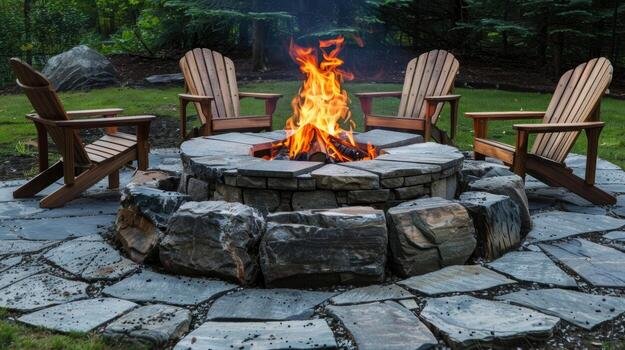
Our most-requested fire feature, and one we construct from the ground up with a fire-rated block core, freeze-thaw rated paver or stone veneer, drainage at the base, and a capstone where the design calls for one. Our masons finish in stone, paver, or brick, in round, square, or rectangular form. Wall height runs eighteen inches for casual seating or twenty-four for comfort.
For yards where the fire pulls people in instead of pushing them back, we sink the pit below patio grade and build a curved seating area around it. Our drainage work is engineered so meltwater flows away from the seating zone, not into it. The result is a conversation pit that reads as a destination. Excavation, drainage, pit core, patio brought up to grade around it.
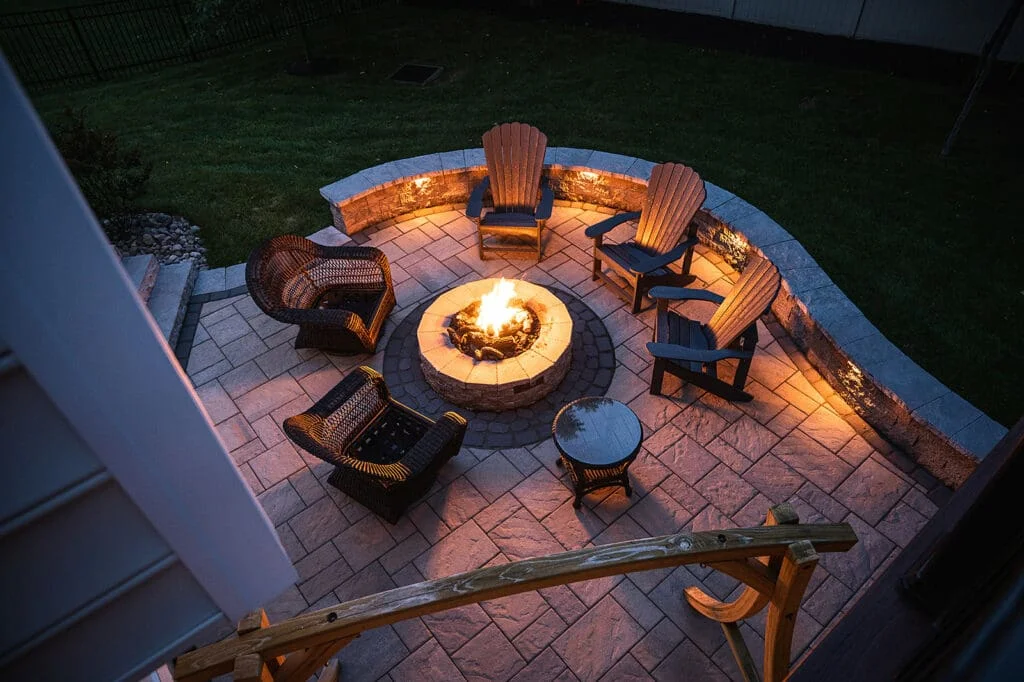
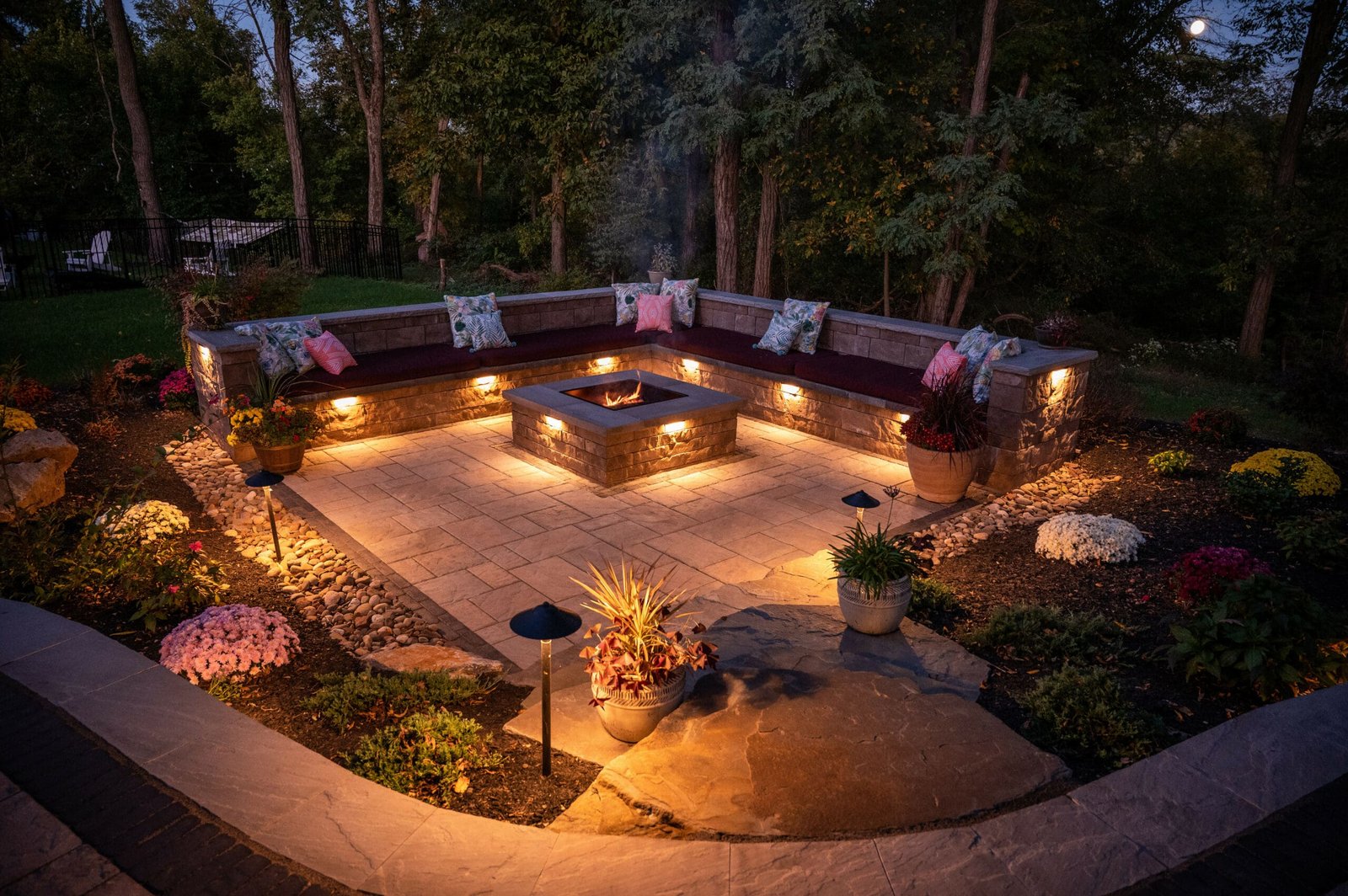
One of the cleanest ways to seat a crowd around a fire without adding furniture. Our team designs the sitting wall and fire pit together as one element, matched in stone or paver and set at eighteen inches for comfortable adult seating. We build the wall so it reads as part of the design, not as overflow seating. The fire pit anchors the whole patio layout from there.
We had Keystone Outdoor Solutions build a paver patio and sitting wall off our kitchen last spring, and it turned out exactly what we hoped for. The team showed up when they said they would, cleaned up every single day, and the finished space looks better than the 3D rendering.
After getting three quotes for a retaining wall, we went with Keystone Outdoor Solutions because they actually walked our slope and explained why the base needed to go deeper than the other guys quoted. One year in, zero settling. Worth every penny.
From the first phone call to the final walkthrough, this was the best contractor experience we have had as homeowners. No runaround, no subcontractors we had never met. Just one team that handled our driveway, stone veneer, and stood behind every piece of it.
Our township is a nightmare with outdoor kitchen permits. Keystone Outdoor Solutions pulled everything, submitted the drawings, and scheduled the inspection without us lifting a finger. The project passed the first time. That alone was worth hiring them.
We already had a paver patio and wanted a deck, fence, and fire feature added. Keystone Outdoor Solutions was the only contractor who could actually picture all of it as one connected space. The materials, the sight lines, and the finish all match. It looks like it was always there.
Tell us how you’d use the space. We’ll walk the yard, take measurements, talk through wood-burning options, and put a 3D rendering together before any stone is laid. The estimate is free, the rendering is free, and the conversation is honest.

Fire pits are centrally positioned in the patio with seating arranged on all sides. Outdoor fireplaces attach to a wall or pavilion and face a single direction. Ventilation separates them as well. Fire pit smoke disperses into open air, but a masonry chimney channels smoke upward.
Fire pit installations typically take a few days on-site to complete. A full outdoor fireplace with a masonry chimney runs two to four weeks. Fireplaces suit pavilions and outdoor kitchens. Fire pits work well with open patios, sitting walls, and sunken seating areas.
Our crew builds wood-burning fire features, the masonry tradition we have worked in since 2002. Gas and propane options exist for homeowners who prefer no firewood storage or ash cleanup. We are glad to talk through the tradeoff at your free onsite consultation.
What goes into a fire feature and what surrounds it both shape how the finished space looks and how long it lasts.
Our materials are chosen for freeze-thaw durability, heat resistance, and how they hold up in Lancaster County winters.
A reliable choice for fireboxes and veneer alike. Brick handles heat well, replaces individually if a unit fails, and holds its look for decades with basic maintenance.
Fieldstone and cut natural stone bring a hand-laid character that manufactured options cannot replicate. We use freeze-thaw rated stone throughout to handle PA winters.
Freeze-thaw rated manufactured veneer gives you a consistent look at a lower material cost than natural stone. Available in a wide range of profiles and colors.
Freeze-thaw rated pavers work well for fire pit surrounds, capstones, and integrated patio runs. Individual units replace cleanly if one is ever damaged.
A fire feature works harder when the surrounding space is built to match it.
A curved sitting wall around the fire pit doubles seating without adding furniture. We build the wall and pit as one integrated masonry element.
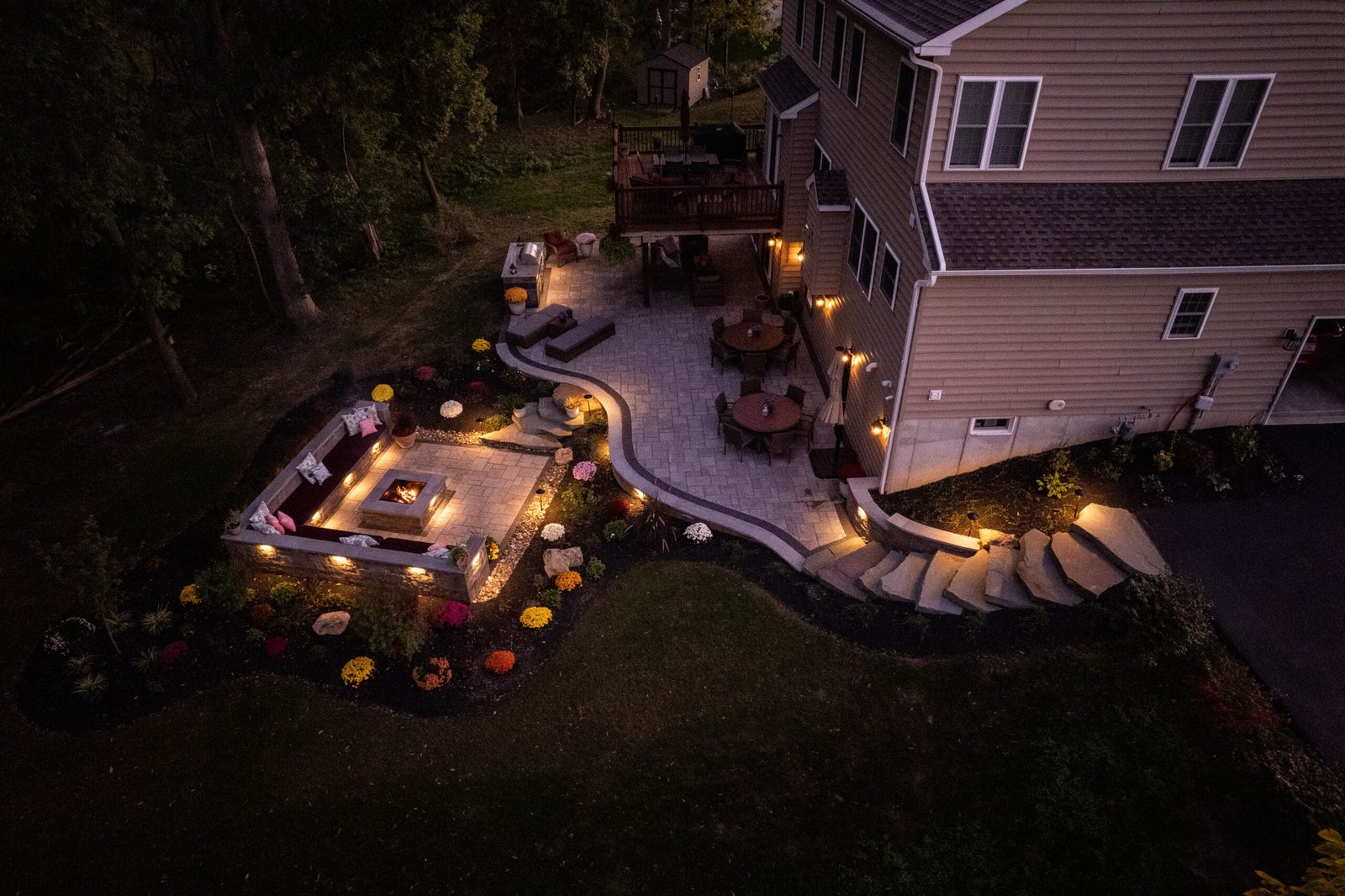
Tying a fireplace or fire pit into an outdoor kitchen run saves a wall, shares a chimney, and gives the whole patio one continuous look.
Sinking the seating below patio grade wraps the fire pit with a built-in curved seating bowl. The grade change frames the fire and pulls the whole space together.

Lancaster County weather is hard on outdoor masonry. We get a real winter, a wet spring, a humid summer, and an autumn full of freeze-thaw cycles that move water in and out of stone every twenty-four hours. That cycle is what cracks bad masonry. Building for it is the difference between a feature that still looks square at year fifteen and one that’s leaking water at year five.
Footings go to the frost line, not above it. Veneer stone is freeze-thaw rated, not whatever was cheapest at the supplier. Mortar joints are fully tooled and sealed. Drainage gets engineered into the base of every fire pit so meltwater has somewhere to go. None of these add a lot to the build. They add to the build that lasts.
Code matters too. NFPA setbacks from structures, overhangs, and combustibles are real numbers, not guesses. PA townships hold them. We do the clearance math at the design stage, not after the inspector calls back.
Our Process
Five steps from the first phone call to the first fire. The same workflow runs for a small fire pit installation or a full outdoor fireplace installation. None of it is a mystery.
01
Our team comes to your yard. We measure, walk the site, listen to how you’d use the space, and ask the questions that change the design. Slope direction, neighbor sightlines, prevailing wind, gas line proximity. No charge, no high-pressure sales pitch.
02
You see the finished feature in 3D before any stone is set. Materials, scale, layout, capstone choice, surrounding patio. All of it adjustable on the rendering. Easier to move a stone on a screen than after it’s mortared.
03
Most townships in Lancaster County have a permit process for permanent masonry fire features. Some don’t. We handle the township coordination, the NFPA setback math (clearance from structures, overhangs, and lot lines), and the inspection scheduling.
04
Excavation starts the build, followed by footings poured to frost depth. Fire-rated blocks form the masonry core, then the veneer is set with clean mortar joints. A cap is installed, drainage is finished at the base, and the surrounding patio is integrated. The mortar then cures fully before first heavy use.
05
We light it together at handover. You see the draft pull, the heat throw, and the way the stone holds the warmth. We walk the maintenance points, hand over the warranty paperwork, and check the surrounding patio for any final cleanup.
Why Choose Us
Every fire feature we build starts from the ground up, including the footing, masonry core, firebrick firebox, and chimney, not from a manufactured kit dressed in veneer. Most kit installations last five to ten years before the metal liner warps and the veneer starts letting water behind it. When you commission a fire pit or outdoor fireplace from us, the structure is real masonry from the footing to the cap, built the way a proper chimney is built.
Keystone Outdoor Solutions is a locally owned and operated masonry contractor, serving Lancaster County since 2002. From the first estimate to the final walkthrough, the same crew handles your project. No outside labor, no handoffs, no chasing down answers. The owner stays reachable through every stage of the build and makes decisions on the spot.
What it covers: settlement, masonry cracking, joint failure, drainage problems caused by our build. What it doesn’t cover: normal stone patina, abuse, refractory wear from heavy daily use, or weather damage outside our control. The warranty is in writing. We come back and fix it. That has been the policy since 2002 and we have no plan to change it.
Pennsylvania freeze-thaw will eat poorly built masonry. Water gets behind the veneer, freezes, expands, pops the stone off. Open joints take in rain. Footings shallower than frost line lift in winter and settle in spring. We build to the climate. Frost-line footings, sealed joints, freeze-thaw rated veneer, drainage at every base.
Tell us about the project. We’ll come out, measure, walk the yard, and talk through your options. You’ll get a 3D rendering and a written, itemized quote before any commitment. No deposit, no surprise charges, no high-pressure follow-up.
Areas We Serve
For over two decades, Keystone Outdoor Solutions has been building custom outdoor fireplaces and fire pits across Lancaster County and South Central Pennsylvania. From wood-burning fire pits and integrated sitting walls to full outdoor fireplace builds with chimneys, our Lancaster-based crew brings masonry-first construction and a five-year written warranty to every project.
Lancaster, PA sits in the heart of Central Pennsylvania, surrounded by farmland, rolling hills, and a mix of older boroughs and newer residential townships. It is one of the oldest inland cities in the United States and has a strong tradition of craftsmanship and built-to-last construction that still runs through the area today.
The county covers a wide range of yard types. Older borough lots in Lancaster City tend to run narrow with limited depth. Township properties in Manheim, East Hempfield, Pequea, and Manor offer more room for larger patio builds, sunken seating areas, and full outdoor kitchen and fireplace combinations. Lower-level walkout lots are common throughout the county, particularly in the newer developments off Route 30, Route 283, and Lititz Pike.
FAQ's
An outdoor fireplace is a vertical masonry structure with a firebox, smoke chamber, and chimney. It directs the smoke up and out, which makes the fireplace usable closer to your home or under a pavilion. The footprint is bigger, the build takes longer, and the cost is higher because the chimney is real masonry work. An outdoor fire pit is open to the sky. It sits central in the patio, seats people three hundred sixty degrees around it, and goes in faster. Smoke handling is open-air, so you choose the location with prevailing wind in mind. Most homeowners pick based on group size, yard space, and how close to the house the feature needs to sit. Both can be built around the same patio in larger yards.
We build wood-burning fire features. Masonry-first, real firebrick fireboxes, real chimney work for fireplaces. Wood gives you the smell, the sound, and the look most homeowners associate with an outdoor fire. Gas and propane fire pits are a separate category in the market. Homeowners pick them for convenience, no firewood storage, and no ash cleanup. If gas or propane is a hard requirement, you’d want a contractor with gas line work as a core service. We’re glad to talk through the tradeoff during the onsite consultation if you’re not sure which direction makes sense for your yard.
It depends on the township and the format. Smaller wood-burning fire pits without a permanent footing sometimes don’t need a permit. A permanent masonry fire pit, an outdoor fireplace with a chimney, or any installation close to a structure usually does. Some townships also have specific rules on backyard burning that affect what you can build. We coordinate every permit and inspection that the project needs as part of the scope. You don’t have to call the township yourself, navigate their forms, or schedule the inspector. If the township needs a stamped engineering drawing for a larger structure, that’s part of the design process.
Fire pit safety setbacks per NFPA guidance for residential wood-burning fire features are generally a minimum of ten feet from any structure, overhang, or combustible material. Some townships hold tighter numbers. The setback also has to account for fence lines, neighbor structures, low tree branches, and roof overhangs. We measure all of it onsite during the consultation. Practically speaking, locating a fire pit twelve to fifteen feet from the house gives you comfortable seating, safe clearance, and enough buffer that smoke and heat aren’t bothering anyone using the kitchen window.
Outdoor fireplace cost and fire pit cost both scale with size, format, materials, and how the feature integrates with the rest of the patio or pavilion. A small built-in wood-burning fire pit with paver veneer is the entry point. A large stone-veneered outdoor fireplace with a full chimney, hearth, and integrated mantle is a much larger investment. Materials change the number too. Natural fieldstone is more labor-intensive than manufactured veneer. A capstone in a slab of bluestone reads differently than one in a manufactured cap. We give you a written, itemized quote after a free onsite consultation, and we walk you through what each line item is doing for the build before you sign anything.
A standalone wood-burning fire pit usually takes a few days on-site once permits are clear, plus mortar cure time before first use. An outdoor fireplace with a full masonry chimney runs two to four weeks on-site, depending on size, weather, and material. Larger projects that integrate the fireplace with a new patio, pavilion, or outdoor kitchen take longer because the schedule has to coordinate with the surrounding work. We give you a project calendar in the contract and tell you the day it changes if anything shifts.
Yes, and it’s often the most efficient way to get both. A shared masonry wall and a shared chimney run cuts material, labor, and footprint compared to building them separately. The combined structure can anchor a pavilion or sit against a privacy wall on the patio. The pizza oven needs its own firebrick chamber and its own flue, but the masonry around both can read as one continuous piece. We build it that way often as part of larger outdoor kitchen projects.
For the firebox itself, refractory firebrick is the standard. It handles direct flame contact for years and replaces it individually if a brick ever fails. For the exterior veneer, freeze-thaw rated natural stone, freeze-rated manufactured stone veneer, or freeze-thaw rated paver products are the durable options. Avoid: cheap pavers as firebox lining (they spall under heat), unrated fieldstone in direct fire contact (it cracks and flakes), and any veneer that wasn’t tested for the freeze-thaw cycle. The mortar matters too. Type S or Type N mortar is what holds up. Cheap pre-mix bagged mortars don’t always survive a real PA winter at the joint line.
For a wood-burning fire pit: clean the ash out after each fire, especially before rain. Check the joints once a year for any opening that needs re-pointing. Clean the surrounding patio at the same time you clean the rest of the patio. For a wood-burning outdoor fireplace with a chimney: same ash management plus an annual chimney inspection if you use the fireplace heavily. The flue needs to be checked for creosote buildup the same as an indoor fireplace. Re-sealing the surrounding patio every three to five years keeps the whole space looking right. Most maintenance is light and predictable. None of it requires special tools or contractors.