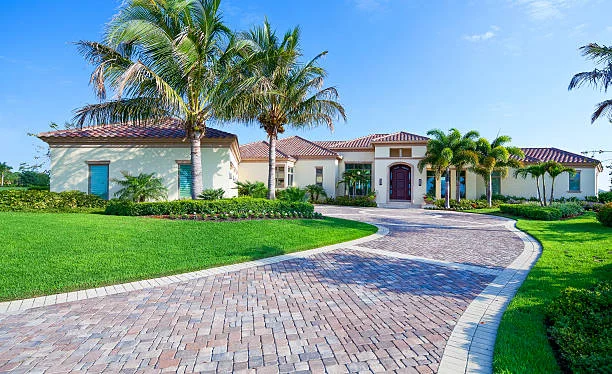
Choosing the best paver patterns for patios, walkways, and driveways is more than a style decision. Pattern controls how units interlock under foot traffic and vehicle loads, how much cutting labor the job needs, and how the surface reads next to a Lancaster County home. Keystone Outdoor Solutions installs Unilock and Techo-Bloc systems across Central Pennsylvania, and the same pattern that looks perfect on a quiet patio can be the wrong choice under daily truck traffic.
Pattern never replaces base depth, drainage, and edge restraint. It does decide how well the field resists spreading once the base is right. A custom patio contractor in Lancaster PA should match the pattern to use first, then to architecture and budget.
How Paver Patterns Affect Strength and Style
Interlock is the mechanical grip between pavers when joints are filled and edges are restrained. Patterns that change direction often, such as herringbone, resist movement in more directions. Patterns with long continuous joints, such as stack bonds, look modern but need careful detailing under heavy load.
Labor and waste rise when a pattern needs more cuts, especially at 45-degree herringbone edges and complex borders. Larger rectangular planks in running bonds can install faster on big patio fields. Random modular blends take planning so the “random” look stays balanced from every angle.
Color and texture still matter. Busy patterns hide tire marks and joint variation. Quiet patterns show every line. Pennsylvania freeze-thaw does not pick a favorite pattern. Water in a weak base damages any layout. Pattern choice sits on top of that engineering.
Herringbone: The High-Interlock Workhorse
Herringbone lays rectangular units in a zigzag so each paver bears against its neighbors at an angle. Installers use 90-degree or 45-degree herringbone relative to the main axis of the space. Industry and manufacturer guidance consistently ranks herringbone among the strongest residential layouts for vehicle loads because interlock works in multiple directions.
Best fits: Driveways, parking aprons, high-traffic patio zones, commercial-style walkways. Trade-offs: More cuts on borders, especially at 45 degrees; slightly higher labor than simple running bond; strong visual texture that can dominate a small courtyard if overused.
For Central Pennsylvania driveways that see SUVs, delivery vans, and winter plowing pressure on the surface, herringbone is the default structural recommendation when the unit shape allows it. Shape must still match the manufacturer’s approved patterns for that product line.
Running Bond for Clean Lines
Running bond, also called stretcher bond, offsets each course by half a unit, like classic brickwork. Lines stay ordered and readable. The pattern works with many rectangle and plank sizes and is efficient on large rectangular patios.
Strength sits below herringbone for heavy vehicle traffic but remains solid for pedestrians when base and edges are correct. On driveways, many crews orient courses across the travel direction rather than only with traffic, improving stability. Linear plank products in running bond create a contemporary boardwalk look popular on modern Lancaster additions.
Manufacturer design resources such as the Unilock guide to herringbone and running bond patterns explain how linear brick and plank shapes perform in those two layouts. Product-specific manuals always override generic pattern advice.
Best fits: Patios, pool decks, long walkways, modern homes. Trade-offs: Less multi-directional interlock than herringbone for heavy vehicles; long joints can show waves if bedding is uneven.
Basket Weave for Traditional Character
Basket weave pairs units in alternating directions to mimic woven fabric. Single and double basket weave variations change scale and busyness. The pattern suits colonial, farmhouse, and historic streetscapes common in borough neighborhoods and older Main Line-adjacent towns.
Basket weave is primarily a pedestrian pattern. It is less ideal as the sole field pattern under constant vehicle turning loads unless the manufacturer approves the unit and the base is built for vehicles. Many designers use basket weave on front walks and courtyard patios, then switch to herringbone on the driveway for strength.
Best fits: Front walkways, formal patios, historic-style homes. Trade-offs: Weaker vehicle interlock than herringbone; square or near-square proportions work best; needs careful edge detailing.

Stack Bond and Linear Looks
Stack bond aligns joints in a grid so each paver sits directly above the one below. The look is crisp and modern. Structurally, continuous joint lines give less interlock than offset or angled patterns. Stack bond belongs on patios and decorative walks with excellent edge restraint, not as the first choice for a primary residential driveway unless the product system is designed for it.
Large-format squares in stack bond create outdoor “rooms” with a contemporary feel. Joint width consistency becomes critical because the eye catches every drift.
Best fits: Modern patios, seating pads, design accents. Trade-offs: Lower structural interlock; unforgiving alignment; driveway use only with careful engineering and manufacturer approval.
Modular Ashlar and Multi-Size Blends
Ashlar and modular patterns mix multiple rectangular sizes in a planned or semi-random field. Many modern concrete paver systems ship as multi-piece kits with recommended layout maps. The result looks like cut stone without full custom cutting.
These blends suit large patios and pool surrounds where a single running bond might look flat. Strength depends on the specific kit geometry. Some modular systems perform well under light vehicle traffic; others are pedestrian only. Crews must follow the manufacturer’s pattern chart so random appearance does not become random instability.
Best fits: Expansive patios, resort-style yards, pool decks. Trade-offs: Higher planning skill; more SKUs on site; waste rises if layouts fight the kit rules.
Best Patterns for Patios
Patios prioritize comfort, furniture layout, and architecture over maximum vehicle interlock. Running bond and modular ashlar dominate modern builds. Basket weave and 90-degree herringbone add traditional texture. Stack bond works when the home’s lines are already geometric.
Keystone Outdoor Solutions often sets a quiet field pattern under dining sets, then uses a border band or soldier course to frame the space. Busy herringbone across an entire small patio can feel tight; the same pattern as a feature strip can look intentional.
Furniture legs and grill stations need a flat plane. Pattern choice should not force excessive slope changes. Surface slope for drainage still comes first.
Best Patterns for Walkways
Walkways need stable footing and clear direction. Running bond along the path length guides the eye. Basket weave suits formal front entries. Herringbone works on steep or high-traffic walks where interlock helps.
Width matters. Narrow walks show pattern scale more aggressively. Large modular pieces can feel oversized on a three-foot path. Borders keep edges tight where lawn equipment and snow clearing hit the sides.
Curves need more cuts in herringbone and less stress with flexible modular systems. Straight paths favor running bond efficiency.
Best Patterns for Driveways
Driveways demand strength under turning, braking, and weight. Herringbone remains the top structural pick among rectangular unit patterns for vehicle areas, a point repeated across manufacturer and contractor guidance. Keystone Outdoor Solutions specifies vehicle-rated bases before pattern talk begins, and paver driveway contractors in Lancaster PA still build deeper sections for vehicles than for patios; pattern is the second half of that system.
Running bond can work on driveways when oriented thoughtfully and paired with strong edges and approved units. Basket weave and stack bond are weaker defaults for full driveway fields. Aprons at the street and garage see the highest stress and often deserve herringbone even if the rest of the field uses another layout.
Snow clearing and occasional salt exposure hit driveways hard in Pennsylvania. Dense ASTM-grade units and tight joints matter as much as zigzag aesthetics.
Pattern Comparison Table
| Pattern | Visual character | Relative interlock | Best primary uses | Labor / cut intensity |
|---|---|---|---|---|
| Herringbone 90° | Classic zigzag | Excellent | Driveways, high-traffic walks, patio accents | Medium–high |
| Herringbone 45° | Dynamic diagonal | Excellent / often highest | Driveways, entry courts | High |
| Running bond | Clean linear rows | Good | Patios, walks, some driveways | Low–medium |
| Basket weave | Traditional woven | Fair–good (pedestrian) | Walks, formal patios | Medium |
| Stack bond | Modern grid | Fair | Decorative patios, accents | Low–medium (alignment critical) |
| Modular / ashlar blend | Cut-stone look | Product-dependent | Large patios, pool decks | Medium–high |
Relative interlock assumes correct base, joint sand, and edge restraint. No pattern overcomes a shallow base on Lancaster County clay.
Pattern samples look different in a showroom tray than under full sun on a 400-square-foot patio. Call (717) 710-1601 or book a free patio and driveway estimate to review unit shapes, borders, and layouts against how the space will actually be used.
Borders, Inlays, and Field Combinations
Borders stabilize the field and finish the design. Soldier courses, sailor courses, and contrasting bands frame herringbone and modular fields. A driveway can run herringbone in the wheel lanes with a darker border that hides edge wear.
Inlays mark dining zones or door thresholds. Keep inlay geometry simple so water still sheds and joints stay consistent. Too many pattern changes on a small pad create visual noise and extra cut waste.
Circles and fans are specialty layouts. They need skilled layout and more waste. They work as patio centerpieces, not as the entire driveway surface.
Pattern Choice Still Needs a Solid Base
Pennsylvania winters still punish trapped water. Geotextile over clay, compacted open-graded base, proper slope, polymeric joints, and continuous edge restraints protect any pattern. A beautiful herringbone field on two inches of base will heave. A plain running bond on a correct base can last decades.
When homeowners compare surface materials, pavers versus stamped concrete in Lancaster PA explains how flexible jointed systems behave differently from rigid slabs under freeze-thaw. Pattern selection applies only after pavers are the chosen system.
Unit thickness also changes with use. Driveway pavers are typically thicker than patio-only products. Manufacturer charts list approved patterns per product. Installers should not force a driveway load onto a patio-grade unit just because the pattern looks right.
Conclusion
The best paver patterns for patios, walkways, and driveways depend on load first and style second. Herringbone leads for vehicle interlock. Running bond and modular blends dominate modern patios. Basket weave suits traditional walks. Stack bond stays mostly decorative. Borders and mixed fields refine the design without weakening the structure.
Keystone Outdoor Solutions matches pattern, product, and base to each Lancaster-area project so the surface still looks planned after years of traffic and freeze-thaw cycles. For budget planning alongside design, the paver patio cost guide for Lancaster PA covers cost drivers that interact with pattern complexity and site access.
Ready to pick a pattern that fits the house and the traffic load? Call Keystone Outdoor Solutions at (717) 710-1601 or book a free patio and driveway estimate and review samples against real use, not catalog photos alone.
Frequently Asked Questions
1. What is the strongest paver pattern for a residential driveway in Pennsylvania?
Herringbone is widely regarded as the strongest common residential pattern for driveways because rectangular units interlock at angles and resist movement in multiple directions under vehicle weight and turning forces. Both 90-degree and 45-degree herringbone are used; 45-degree layouts often need more border cutting and labor. Pattern strength only works with a vehicle-rated base depth, proper edge restraints, and paver units the manufacturer approves for driveways. Running bond can perform on some driveways when oriented carefully, but it generally offers less multi-directional interlock than herringbone. Basket weave and stack bond are weaker defaults for full driveway fields. In Central Pennsylvania, freeze-thaw and clay soils make base and drainage as important as zigzag geometry. A thin base under herringbone will still heave after wet winters.
2. Which paver pattern looks best for a patio without feeling too busy?
Running bond and modular ashlar blends are the most common “calm but finished” patio choices. Running bond keeps lines clean under tables and chairs. Modular multi-size kits add stone-like variety without the visual intensity of full-field herringbone. Basket weave suits traditional architecture when the patio is large enough for the weave to read correctly. Stack bond fits modern homes with strong grid lines but needs precise installation. Many designs use a quieter field pattern with a contrasting border so the eye gets structure without chaos. Furniture layout should guide scale: large modular pieces can overwhelm a small balcony-style patio. Sample boards outdoors in natural light help more than indoor trays. Final selection should still respect slope and drainage so water leaves the field.
Note: A beautiful patio looks even better when paired with a healthy lawn, and our professional lawn fertilization services help keep the surrounding landscape green throughout the growing season.
3. Is basket weave a good pattern for driveways and high vehicle traffic?
Basket weave is usually better for walkways and patios than as the sole pattern across a primary driveway. The woven layout is attractive and traditional, but it typically provides less continuous multi-directional interlock than herringbone under repeated vehicle loads and turning. Some projects use basket weave on a front walk and herringbone on the driveway to get both character and strength. If a homeowner strongly wants basket weave in a vehicle area, the unit type, base design, and manufacturer approvals must support that load, and thicker driveway-rated pavers become essential. Edge restraints and joint maintenance still matter. For most Lancaster-area driveways that see daily SUVs or trucks, herringbone remains the safer structural default. Aesthetic preference should not override traffic reality.
4. Does a 45-degree herringbone driveway cost more than running bond?
Yes, 45-degree herringbone usually costs more in labor and waste than simple running bond because more units need cutting at borders, curves, and garage openings. Material square footage is similar, but install time rises. Ninety-degree herringbone often sits between running bond and 45-degree herringbone for labor. Complex borders, circular inlays, and multi-color banding add cost on any pattern. Site access, base depth for vehicles, and demolition of old pavement often affect the budget more than pattern alone. Homeowners should request line items that separate base work from pattern labor so comparisons between bids stay honest. Pattern upgrades are easy to price once the field size is fixed. Choosing a simpler field with a strong border can capture style without full 45-degree cutting costs.
5. Can different paver patterns be mixed on one property in Lancaster County?
Yes. Mixing patterns is common and often smart. A driveway may use herringbone for strength while a rear patio uses running bond or modular ashlar for a calmer seating surface. Walkways can shift to basket weave near a traditional front elevation. Success depends on transitions: use borders, soldier courses, or clear breaks so patterns do not collide in a messy seam. Shared elevations and continuous drainage planes matter more than matching every zigzag. Color families should relate so the yard feels designed, not pieced together from leftover pallets. Crews should stage materials carefully so the right shapes land in the right zones. Mixed patterns also help hide repairs later if one area needs lifting. Document the layout map for future matching.
6. Will a strong paver pattern prevent freeze-thaw heaving in Pennsylvania winters?
No. Pattern improves interlock against lateral spreading under load, but freeze-thaw heaving is driven mainly by water in the base and subgrade. Clay soils common in Lancaster County hold moisture that expands when it freezes. Shallow bases, missing geotextile, flat grades, and washed-out joint sand cause heave under any pattern, including herringbone. Correct base depth, drainage slope, edge restraints, and polymeric joints protect the field through winter cycles. Pattern choice should follow use and style after those structural decisions are locked. Sealing and winter salt habits affect surface appearance more than pattern geometry. Homeowners who already have heaved fields need base diagnosis, not only a new zigzag layout on the same failed foundation. Strong pattern plus weak base is still a weak system.