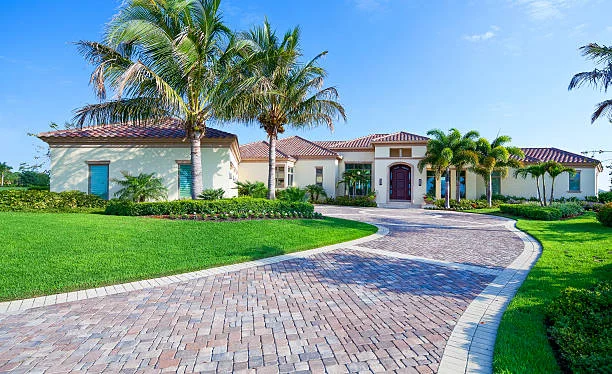
Most Lancaster homeowners get a vague answer to this question: 20 to 50 years. That range is technically accurate, but it does not tell homeowners what determines where a specific patio lands on that spectrum. A paver patio installed on a proper 6-inch compacted gravel base with polymeric sand joints can reach 25 to 30 years or more without major structural work.
A patio put down on 3 inches of base material with regular sand joints on Lancaster County clay soil can start failing inside five to seven years. The difference is not the paver brand. It is everything that happens before the first stone gets laid.
As a patio contractor in Lancaster, PA, Keystone Outdoor Solutions has diagnosed that pattern of early failure across dozens of properties in Lancaster, Berks, and Chester counties over the past two decades. The failure points are consistent and almost entirely preventable.
What Paver Patio Lifespan Numbers Actually Mean
Concrete pavers from quality manufacturers carry ASTM C936 certification, which requires a minimum compressive strength of 8,000 psi and confirmed freeze-thaw durability testing. A paver unit built to that standard has a material lifespan that can outlast the house it sits next to. But material lifespan and installation lifespan are two different things. The paver itself almost never fails first. The base does.
Most paver patio failures in Pennsylvania happen at the sub-base level, not at the surface. Pavers that have heaved, shifted, or sunken are usually sitting on a base that was undersized, poorly compacted, or built without proper drainage. The pavers themselves are often still structurally intact. The problem is underground, where freeze-thaw cycles have worked moisture through loose aggregate season after season until the grade shifts enough to make the surface uneven.
This is why comparing lifespan claims across contractors without also comparing base specifications is not a useful exercise. A 25-year claim on a 3-inch base in Lancaster County clay is a fundamentally different commitment than a 25-year claim backed by proper excavation depth, geotextile separation, and ASTM-rated materials. The number alone tells most homeowners nothing useful.
Why Pennsylvania Winters Are the Real Test for Paver Patios
Lancaster County averages 30 to 40 freeze-thaw cycles per winter. A freeze-thaw cycle occurs when ground temperature drops below 32 degrees Fahrenheit and then rises above it, causing moisture in the soil and base aggregate to expand and contract. Each cycle puts lateral pressure on the base material. Poorly compacted aggregate shifts incrementally with each one. Over three to five winter seasons, that cumulative movement becomes visible at the surface as rising paver corners, sunken centers, and widening joints.
Freeze-Thaw and Lancaster County’s Clay Soils
Lancaster County sits on heavy clay soil across a wide portion of the county. That includes much of Manheim Township, Ephrata, Lititz, and the farmland east and south of the city. Clay holds moisture rather than draining it. A base installed directly on clay without a geotextile fabric separator allows fine clay particles to migrate upward into the aggregate base over time.
This reduces drainage capacity and structural stability through a process called pumping. It accelerates during active freeze-thaw cycling and compounds with each winter that passes. Keystone Outdoor Solutions specifies geotextile fabric on every clay-heavy Lancaster site as a standard build requirement. Contractors who omit this step produce patios that lose structural integrity well ahead of schedule.
Pennsylvania Frost Depth and What It Means for Base Depth
Pennsylvania’s frost depth in Lancaster County typically reaches 24 to 30 inches below grade during severe winters. Base preparation does not go that deep, but it does need to account for frost movement in the upper soil layers. A base that retains moisture freezes harder and expands more aggressively. A well-graded aggregate base that drains quickly freezes less severely and moves less, keeping the surface flat and the joints tight through repeated winter cycles. Soil drainage capacity is the variable that separates Lancaster County patio builds from comparable projects in warmer states. What works fine in Virginia does not always hold up in Central PA.
Five Things That Make a Paver Patio Fail Early in Pennsylvania
Every paver patio that fails ahead of schedule in Central PA fails for one of five reasons, or a combination of them. Understanding these failure modes helps Lancaster homeowners ask the right questions before signing a contract.
1. A Base That Is Too Shallow
ICPI guidelines recommend a minimum 4-inch compacted aggregate base for residential patio applications. In Pennsylvania’s freeze-thaw climate, that is the floor, not the standard. On clay-heavy Lancaster County soils, 6 inches of compacted AASHTO 57 crushed stone is the correct starting depth, with 8 to 10 inches on lots with persistent drainage problems or soft subgrade conditions. Patios built on 2 to 3 inches of base aggregate cannot maintain a flat surface through multiple Lancaster winters. Sunken corners and rising edges appear within the first two to three years and worsen with each freeze season that follows.
2. No Drainage Design in the Base
Drainage slope matters as much as base depth. ICPI installation standards require a minimum 1.5 to 2 percent slope away from the structure for proper surface and base drainage. A flat or incorrectly sloped base traps water. That water saturates the bedding sand layer, works into the aggregate base, and provides the moisture that freeze-thaw cycling needs to do structural damage. Most early patio failures in Lancaster County involve inadequate drainage as a contributing factor, even when base depth looks acceptable.
3. Regular Sand Instead of Polymeric Sand in the Joints
Joint sand holds the interlock system together. Regular bedding sand washes out progressively from rainfall, foot traffic, and freeze-thaw movement. Once the joint sand depletes, pavers shift laterally, weeds root through open joints, and ants begin excavating the bedding layer from underneath. Polymeric sand uses a binder that hardens after wetting and curing, locking the joints closed and resisting washout and biological infiltration. The material cost difference between regular and polymeric sand is minor. The lifespan difference is measured in years.
4. Missing Edge Restraints
Edge restraints anchor the perimeter row of pavers in place. Without them, the outermost pavers push outward under foot traffic and freeze-thaw pressure. Once the edge begins to spread, the displacement works inward progressively until the entire field loses joint stability. A common low-bid shortcut is to bury edge pavers in concrete rather than install proper plastic or steel edge restraints. The concrete cracks in time and the edge still shifts. Properly spiked restraints installed at finished base level hold the perimeter for the full life of the patio.
5. Budget Pavers Not Tested for Freeze-Thaw
Not all concrete pavers carry ASTM C936 certification. Budget pavers available at home improvement stores often skip independent freeze-thaw durability testing. They absorb more water, cycle more aggressively through Pennsylvania winters, and develop spalling faces and fractured corners within the first two or three freeze seasons. Material savings at installation do not survive the first hard Lancaster winter.

What a Paver Patio Built to Last in Lancaster Actually Looks Like
A durable Lancaster paver patio is built from the ground up. The surface material is the last decision, not the first. Base depth, drainage slope, geotextile separation, edge restraint specification, and joint sand selection collectively determine how long the finished surface stays flat and tight. The right base system produces a patio that holds for three decades. A shortcut base produces one that fails inside ten years.
Keystone Outdoor Solutions builds every Lancaster patio on a minimum 6-inch compacted AASHTO 57 stone base over geotextile fabric on clay-bearing soils. That base layer gets 1-inch bedding sand screeded level, polymeric sand joints, and spiked edge restraints installed around the full perimeter. Unilock and Techo-Bloc pavers go on top of that system because both manufacturers produce concrete paving units that exceed ASTM C936 freeze-thaw standards. Both carry product warranties that protect the surface material alongside the workmanship.
For Lancaster homeowners comparing surface materials, stamped concrete options in Lancaster are worth understanding alongside pavers. Stamped concrete carries a lower upfront cost and achieves similar decorative effects, but it behaves as a rigid slab in freeze-thaw conditions. Cracks that develop in stamped concrete during Lancaster winters are difficult to repair without visible patching. Paver systems flex slightly at the joints, absorbing freeze-thaw movement without cracking the individual surface units.
Ready to build a paver patio in Lancaster that holds up through every winter? Most early patio failures trace back to decisions made underground, not at the surface. Call (717) 710-1601 to book a free onsite consultation with our Lancaster team, or request a free estimate online and we will be in touch within one business day.
Paver Patio vs. Stamped Concrete vs. Poured Concrete: Which Lasts Longer in Pennsylvania?
The table below reflects realistic lifespan and performance expectations for Central PA conditions in 2026. Each material serves different homeowner needs and budget ranges. Lifespan figures assume professional installation with correct base preparation for each material type.
| Material | Typical Lifespan in PA | Repair Approach | Freeze-Thaw Performance |
|---|---|---|---|
| Concrete pavers (Unilock / Techo-Bloc) | 25 to 30+ years | Individual unit replacement | Engineered for freeze-thaw; flexes at joints |
| Stamped concrete | 15 to 25 years with sealing | Full slab repair or resurfacing | Rigid slab; prone to cracking under cycling |
| Poured concrete | 10 to 20 years | Crack filling or full slab replacement | Cracks without control joints; repairs are visible |
| Natural flagstone | 25 to 40+ years | Individual stone replacement | Strong with proper mortar or compacted base |
Every number in this table assumes the base was built correctly. A concrete paver patio on a 3-inch base will not reach 25 years in Lancaster County. A stamped concrete patio sealed every two years on a well-prepared base can reach 20 years in good condition. Base preparation is the common denominator across every surface material, and no surface choice compensates for a base that was cut short.
How to Add Years to a Paver Patio Already in the Ground
Paver patios already in service in Lancaster County benefit from consistent maintenance that extends lifespan without major cost. Joint sand is the highest-priority maintenance item. Sweeping fresh polymeric sand into open joints and activating it with water every three to five years keeps the interlock system locked and weed and ant pressure under control. Most Lancaster homeowners can complete this task in an afternoon.
Sealing protects paver faces from staining and surface degradation, though it is not a structural requirement for a well-installed patio. A penetrating sealer applied every four to six years is the typical residential schedule. Film-forming acrylic sealers should be avoided on patios with drainage concerns, as they can trap moisture beneath the surface and accelerate freeze-thaw stress on the paver faces.
For patios that have already developed sunken sections, lifted corners, or failing joints, paver restoration services in Lancaster address the problem through localized repair rather than full replacement. Individual sections can be lifted, the base releveled, and the pavers reset without disturbing the surrounding field. Catching this work early costs significantly less than waiting until multiple sections have failed across the patio.
The Interlocking Concrete Pavement Institute publishes detailed guidance on installation standards, base preparation requirements, and long-term maintenance practices. Homeowners and contractors can review those specifications through the ICPI paver installation standards.
Conclusion
Lancaster County’s freeze-thaw climate does not forgive shortcut base work. A paver patio built correctly on this soil, in this climate, with ASTM-certified materials and proper drainage design can last 25 to 30 years or more with minimal intervention. A patio built on a shallow base with regular sand and no edge restraints can fail visibly within five to seven years, regardless of how clean it looks on installation day.
Keystone Outdoor Solutions has been building Lancaster patios since 2002. Every install starts with a thorough base assessment and ends with a 5-year workmanship warranty, because the quality of the base determines everything that follows. Lancaster homeowners deciding between a paver patio and a deck for their property will find this deck vs patio comparison for Lancaster homeowners a useful place to start that conversation.
Ready to create an outdoor space built to last? Our team designs and installs durable paver patios that enhance both the beauty and value of your property. Call (717) 710-1601 or contact Keystone Outdoor Solutions for your free estimate today.
FAQs
How long does a paver patio last in Pennsylvania if it was properly installed?
A properly installed concrete paver patio in Pennsylvania can last 25 to 30 years or more before requiring significant structural attention. The key qualifiers are properly installed, which in Lancaster County means a minimum 6-inch compacted aggregate base over geotextile fabric on clay soils, polymeric sand joints, spiked edge restraints, and ASTM C936-certified paving units from manufacturers like Unilock or Techo-Bloc. Patios that meet those specifications hold up through Pennsylvania’s freeze-thaw cycles reliably and typically require only periodic joint sand maintenance and occasional sealing between installation and year 25. Patios installed on undersized bases or with standard sand joints often start showing movement within 5 to 10 years, regardless of how good the surface material is. The paver unit itself is rarely the failure point. The base system underneath is almost always where early failures begin, and that is where the quality difference between contractors shows up most clearly.
What is the most common reason paver patios fail early in Lancaster County?
The most common cause of early paver patio failure in Lancaster County is an undersized, poorly compacted base combined with inadequate drainage. Most problem patios arrive with a 2 to 3 inch base layer on Lancaster’s heavy clay soil, often without geotextile fabric to separate the base aggregate from the clay subgrade. Clay absorbs and holds moisture. In freeze-thaw cycling, that moisture expands and contracts, shifting the base aggregate incrementally with each cycle. Over three to five winters, those small shifts accumulate into visible surface problems: sunken sections, raised corners, and widening joints. The pavers themselves are usually still in good structural condition. Repairing this failure type requires lifting affected sections, regrading and recompacting the base, and resetting the surface. Addressing drainage at the same time is essential, because fixing the surface without correcting the drainage means the same failure returns within a few years.
How deep should a paver base be in Central Pennsylvania?
For residential patio applications in Central Pennsylvania, a minimum of 6 inches of compacted AASHTO 57 crushed stone is the correct starting specification, not the 4-inch minimum listed in basic ICPI residential guidelines. Lancaster County’s clay-heavy soils require deeper base preparation because clay retains moisture and shifts more aggressively in freeze-thaw conditions than sandy loam or silt soils common in other parts of the country. On lots with consistent drainage problems, a persistent high water table, or soft subgrade conditions, 8 to 10 inches of compacted aggregate over geotextile fabric is appropriate. The goal is to build a base deep enough that freeze-thaw movement in the upper soil layers does not transfer upward into the aggregate and disturb the bedding sand above. Skipping the geotextile layer on clay soil is one of the most common installation errors that leads to base failure over the first decade.
Does sealing a paver patio make it last longer in Pennsylvania winters?
Sealing protects the surface of paver units from staining, fading, and biological growth, but it does not improve the structural performance of the base system beneath. A sealed patio on a shallow base still fails when the base shifts. That said, a quality penetrating sealer applied to a well-built patio every four to six years does extend surface appearance and protects paver faces from the deicing salt and moisture absorption that accelerates surface degradation in Lancaster winters. The sealer to avoid is a thick film-forming acrylic sealer on patios with drainage concerns, as these can trap moisture under the film and create freeze-thaw pressure against the paver face. A penetrating or breathable sealer allows moisture to move through the paver rather than accumulating behind a sealed barrier. For most Lancaster homeowners, sealing is worthwhile for surface protection but does not substitute for proper installation and joint sand maintenance as the primary factors in long-term patio performance.
How do I know if my existing paver patio base was installed incorrectly?
Several signs point to a base problem rather than surface wear. Uneven sections where individual pavers or clusters of pavers sit noticeably higher or lower than surrounding areas typically indicate base settling or frost heaving. Joint gaps that have widened significantly since installation suggest lateral movement from missing or failed edge restraints, or from depleted joint sand that no longer holds the interlock system together. Patio areas that drain poorly or hold standing water after rain are showing base slope problems, often from a flat base or from base material that has shifted and reduced the original drainage grade. Pavers that rock when stepped on indicate that bedding sand beneath them has washed out or compacted unevenly. If multiple sections across the patio show these signs, the base problem is likely widespread rather than isolated. A localized repair addresses smaller affected areas. If failures span more than 25 to 30 percent of the surface, a full base reassessment and systematic repair is the more cost-effective path.
What is the difference in lifespan between paver patios and stamped concrete in Pennsylvania?
A well-installed concrete paver patio in Lancaster County typically lasts 25 to 30 years or more, while a well-installed stamped concrete patio in the same climate typically lasts 15 to 25 years with consistent sealing and maintenance. The lifespan difference comes down to how each material handles freeze-thaw cycling. Paver systems are flexible at the joints, meaning freeze-thaw movement is absorbed as small shifts that can be corrected with joint sand maintenance and occasional releveling. Stamped concrete is a rigid slab, and freeze-thaw cycling creates tensile stress that eventually produces cracks. Once stamped concrete cracks, matching the original color and pattern in a repair is difficult, so most visible repairs stay visible. Pavers allow individual unit replacement that blends into the existing field. The upfront cost of stamped concrete is lower, but the maintenance and repair cost over a 20-year span in Central PA tends to narrow that gap considerably.